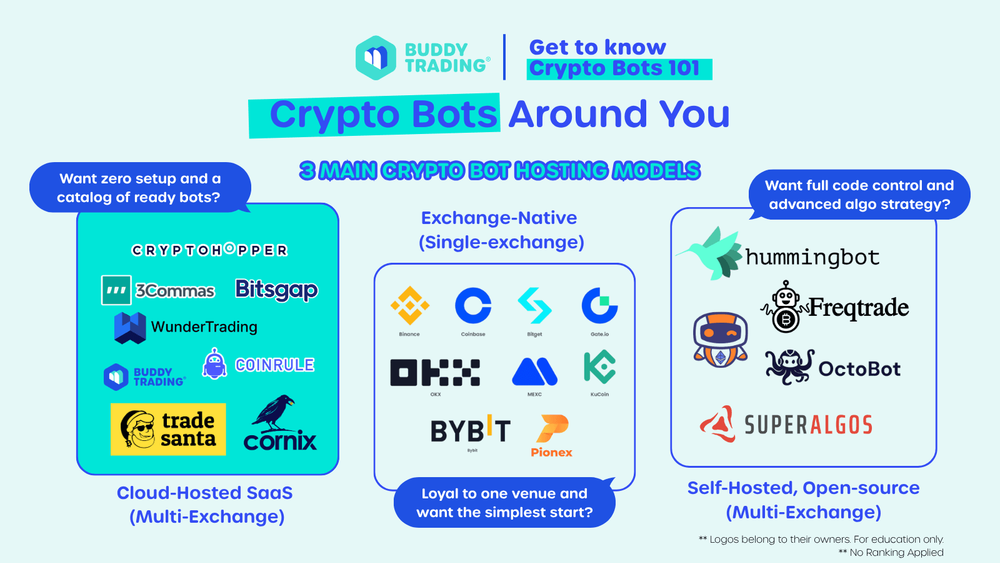
Open-source crypto trading bots explained, a guide for trader in 2025, in this paper we'll dive to understand who they’re for and how to choose.
Comparing different big players including Hummingbot, Freqtrade, Jesse, OctoBot, Superalgos, plus pros/cons and safety.
Get to Know Crypto Bots 101 — Open-Source (Self-Hosted) Bots
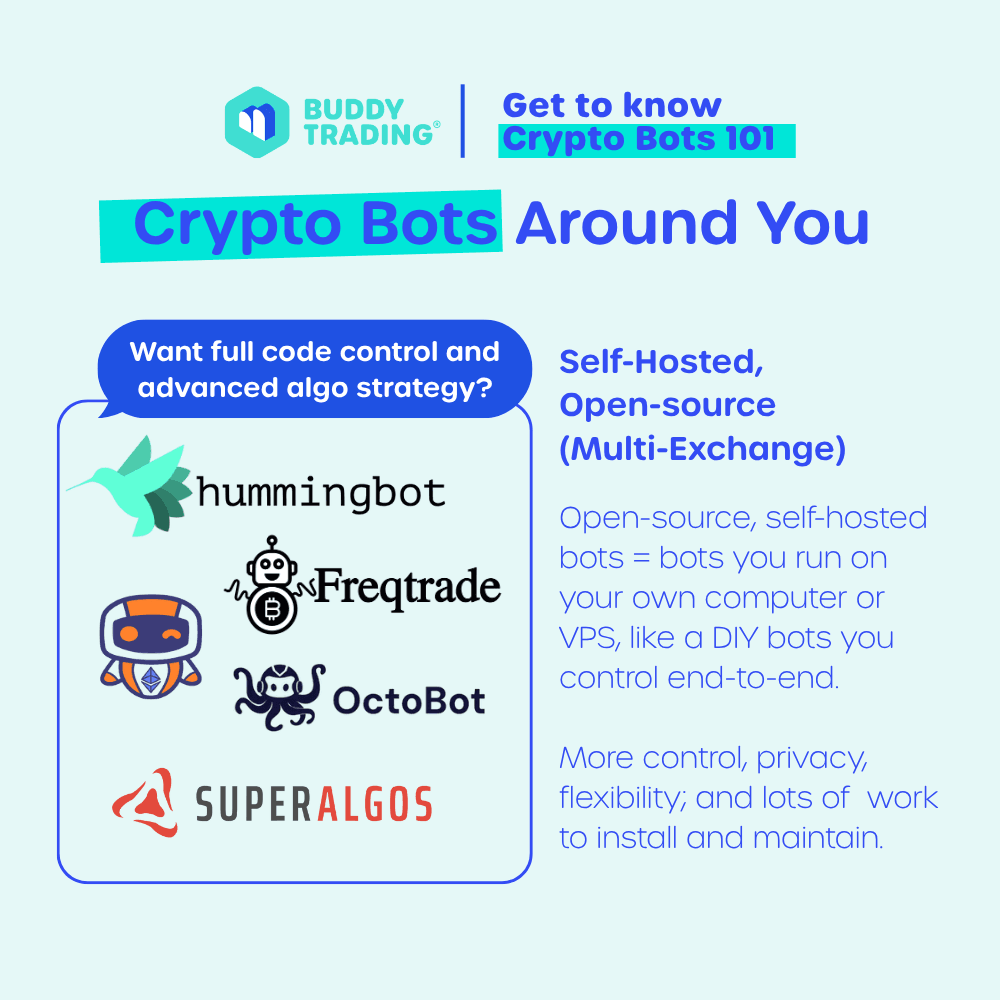
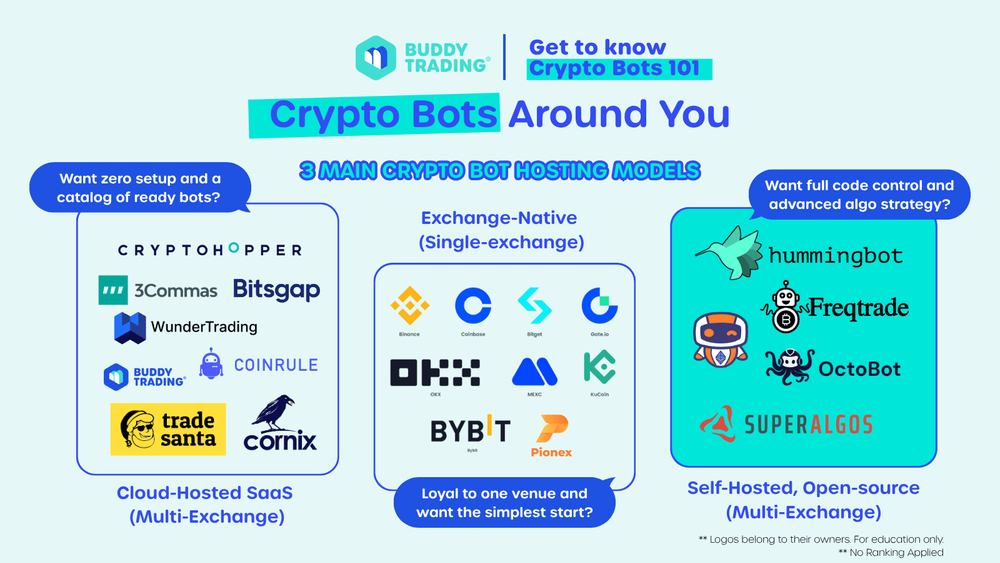
Open-source bots are frameworks you run yourself (laptop, VPS, Docker, K8s). You get code-level control, transparent backtests, and multi-exchange reach — and you take on uptime, patching, and key security. This piece covers the five projects most teams actually evaluate: Hummingbot, Freqtrade, Jesse, OctoBot, and Superalgos.
1. Snapshot: Who are the Open-Source (Self-Hosted) Bots
Hummingbot standardizes REST/WebSocket across CEX (spot/perp) and DEX (CLOB/AMM) with a mature connector inventory and a Gateway for on-chain routing — why it’s so popular for market making and cross-venue execution.
Research loop & ML
Freqtrade’s core value is the iterate → backtest → optimize loop (Hyperopt, Optuna-style flows, FreqAI). It rides CCXT for exchange coverage; the docs are clear that while CCXT supports 100+ exchanges, the project validates a subset for reliability.
Project structure & clarity
Jesse leans into readable strategies and high-fidelity backtests with an opinionated Python framework; it ships under MIT and has a clean research-to-live workflow.
UI over CLI
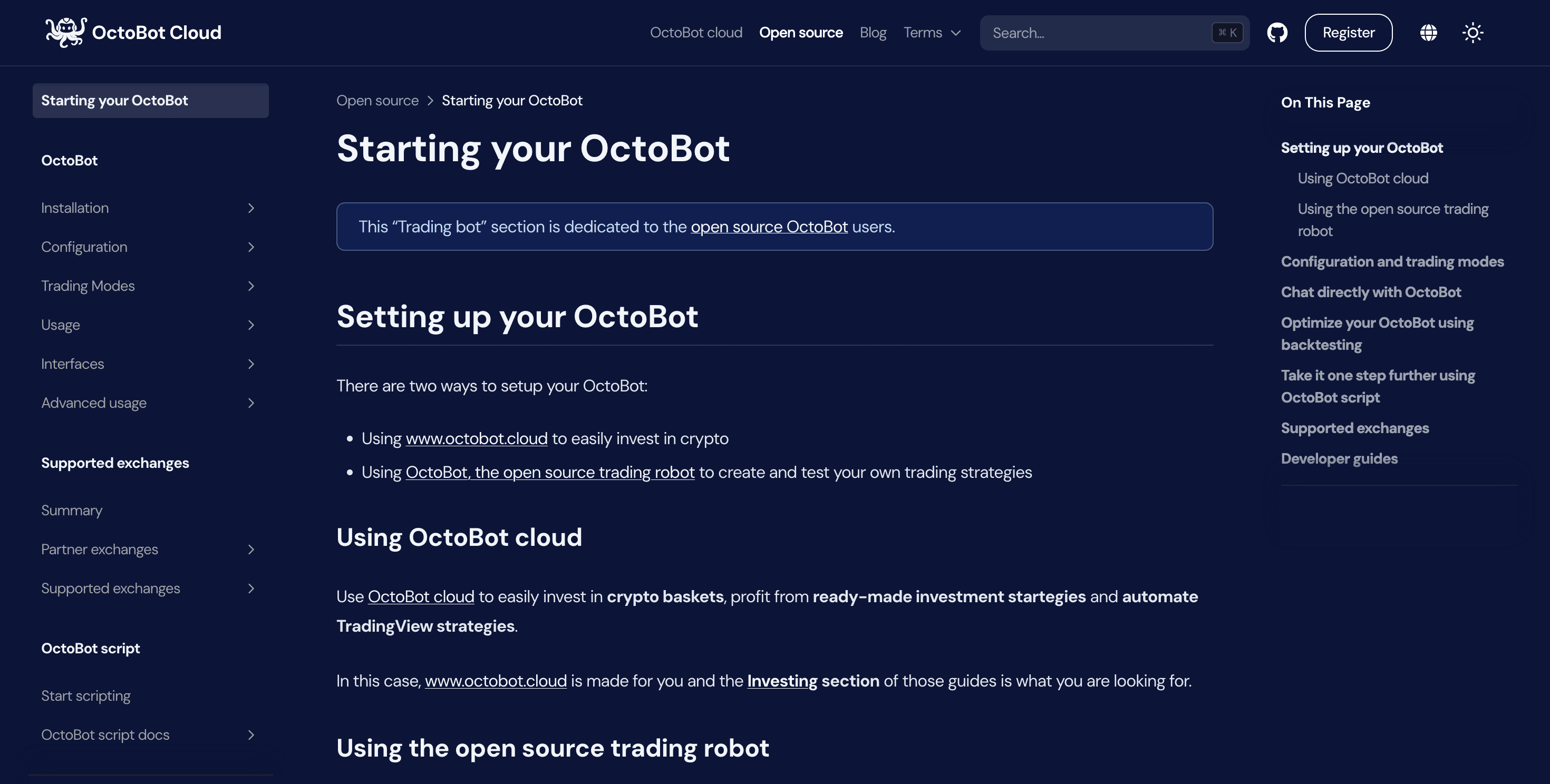
OctoBot exposes config and live management via a web UI (one-line Docker / DigitalOcean Marketplace), supporting spot & futures on a growing official list (Binance, OKX, KuCoin, Coinbase, Bybit, Bitget, MEXC, Hyperliquid, etc.).
Visual pipelines
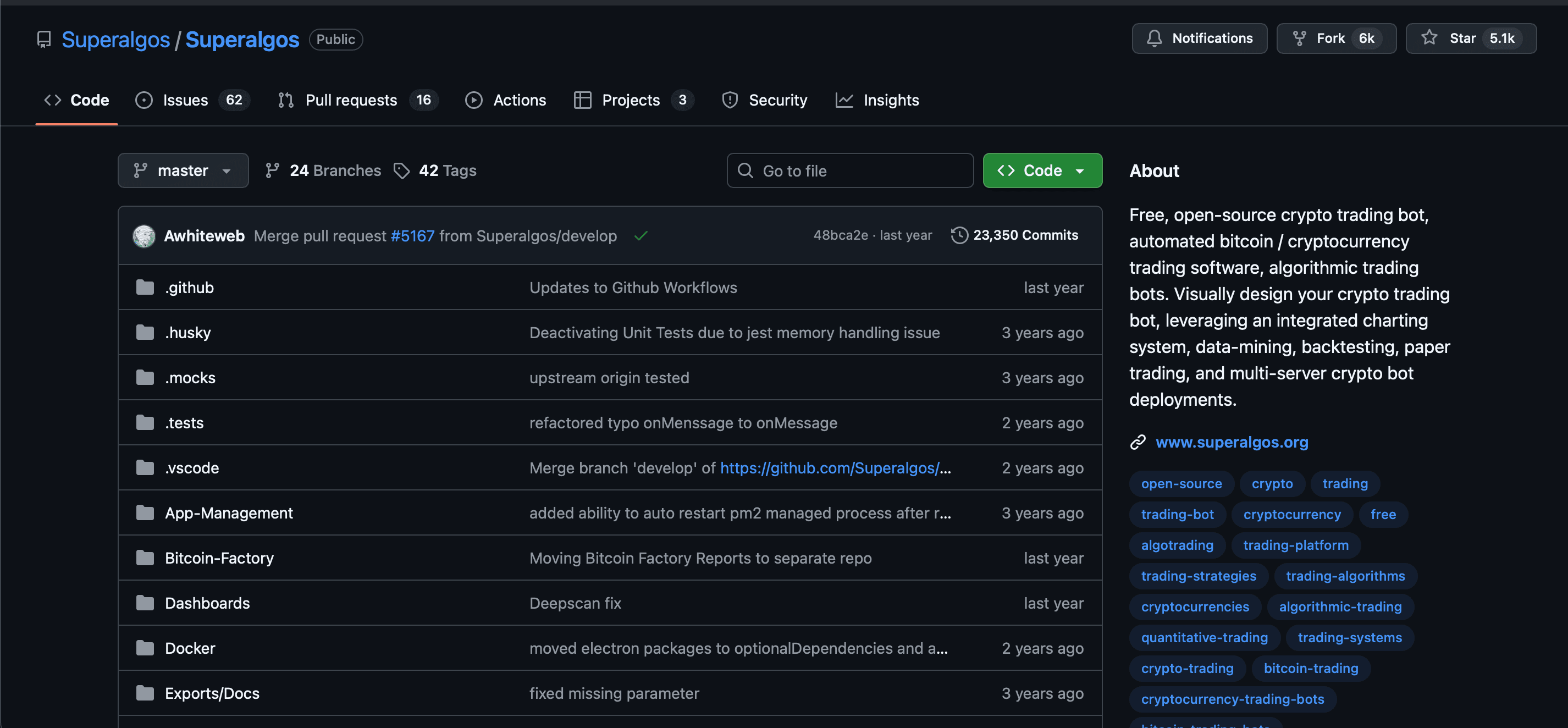
Superalgos is a node-based, visual environment with integrated data-mining, backtesting and multi-server orchestration — at the cost of a heavier footprint and a JS-centric stack.
* Stars/release info reflect GitHub at time of writing; click through for live numbers.
4. What each one actually specializes in (with deep links)
Hummingbot is the go-to when you care about order-book microstructure and connector breadth — market-making templates, CEX and on-chain CLOB/AMM routing via Gateway. If your roadmap includes CEX/DEX arbitrage or migrating maker logic on-chain, Hummingbot minimizes rewrites because the connector abstraction stays stable. Install flow and Docker compose are documented in the repo.
Freqtrade wins the research loop: clean Strategy class API, Hyperopt for parameter search, FreqAI for adaptive ML models, all wrapped with CLI + Web UI. Docs make clear that while CCXT lists 100+ exchanges, Freqtrade only tests a subset; treat others as community-tested. That honesty saves you from silent production surprises.
Jesse is for those who want tidy Python projects and reproducible backtests with minimal boilerplate. The framework emphasizes accuracy (no look-ahead), multiple symbols/timeframes, and an opinionated structure that keeps your repo clean as strategies multiply. License is MIT, so it’s friendly for teams building private IP.
OctoBot gives you open source with a UI: spin up from the DigitalOcean Marketplace or Docker, toggle exchanges in the web interface, and combine TA / AI / TradingView triggers. The project also maintains a dedicated market-making distribution when you want simple quote-provisioning without writing a new framework.
Superalgos targets teams that think in graphs rather than files: visually wire data mining → labeling → strategies → execution, then scale to multi-server farms. It’s heavier than a Python CLI bot, but if your org prefers visual auditability and shared canvases, it’s unique.
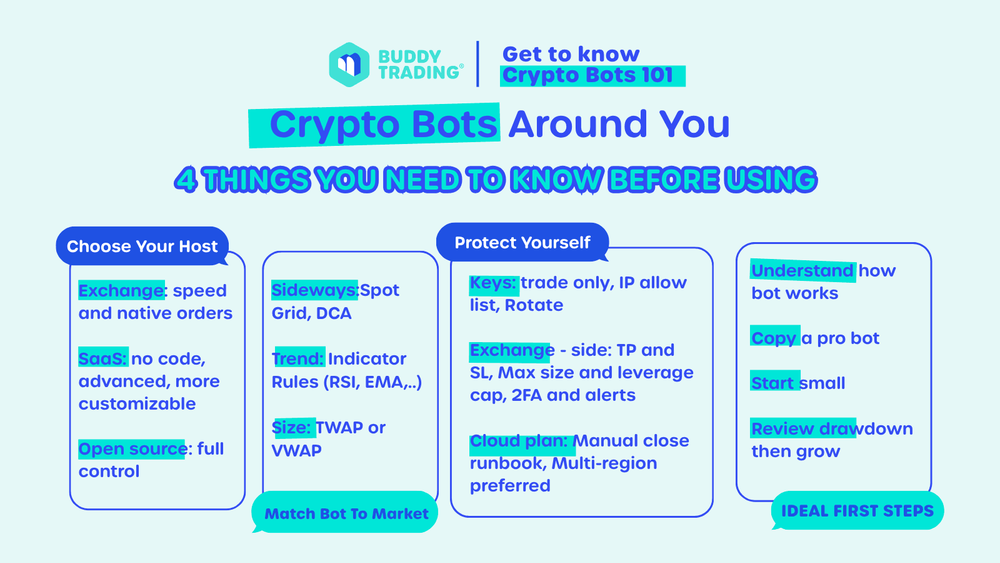
5. Security & “lockdown” checklist (for any open-source bot)
API key scopes:read + trade only, never withdrawals; rotate quarterly and vault secrets.
Network allowlists: restrict by IP; run behind a static egress IP (VPS or NAT gateway).
Secrets management: inject via env/secret files outside the repo; never commit .env.
Least-privilege runtime: separate Linux user, no root; containerize; read-only mounts when possible.
Controls: daily loss cap, per-bot position caps, time-based kill switches, alerting (Telegram/Web UI/Grafana).
Dry-run & backtests: simulate first; in Freqtrade & OctoBot use paper mode; in Hummingbot/Jesse run backtests before live.
6. Which one should you pick?
You trade like an execution engineer (maker, hedger, CEX/DEX bridges): start with Hummingbot; you’ll reuse code as venues change.
You’re a quant tinkerer who cares about quick learning cycles: Freqtrade — the Hyperopt + FreqAI loop is hard to beat.
You want clean research → live with minimal friction and permissive licensing: Jesse.
You prefer a GUI but want open source and multi-exchange without writing everything from scratch: OctoBot.
Your team collaborates visually across data prep and execution: Superalgos.
7. Pros & cons of the open-source lane (why teams commit)
Pros: maximum customization and observability; verifiable research artifacts; permissive licenses (Apache/MIT) for private IP in Hummingbot/Jesse/Superalgos; costs that scale with infra rather than per-bot SaaS.
Cons: you own DevOps; connectors can break when exchanges change APIs (projects like Freqtrade call out “tested” vs “possible” venues for exactly this reason); onboarding for non-coders is steeper unless you choose a UI-first project like OctoBot.
Plug your exchange in minutes with a secure API (read + trade only, never withdrawals), then build your own logic or copy proven bots in one place on BuddyTrading. Start in paper, validate with caps, and scale when the curve turns your way.

 Our Blog
 7 min read
 Oct 23, 2025