A login link has been sent to your inbox. If it doesn't arrive in 3 minutes, be sure to check your spam folder.
 Our Blog
Compare copy trading platforms in 2025. Learn where quant traders, bot creators, algo strategy builder can monetize strategies and maximize profit share.
The copy trading ecosystem has split into several marketplace types—broker-run platforms, social investing apps, share-based products, and dedicated bot marketplaces—each with unique rules, revenue models, and buyer behaviors. Understanding these differences is essential to choose the right platform, maximize profit share, and grow long-term visibility as a strategy creator.
Replication timing, allocation math, and risk tooling decide follower PnL drift relative to the leader. When you evaluate a venue, confirm:
How it runs: Exchange-native replication for spot portfolios. Followers copy new trades according to the leader’s actions with platform controls. Portfolio size must sit between 500 and 250,000 USDT, and each new spot portfolio starts with a 300 copier limit. Lead trader payout: 10% of follower profits + 10% of follower trading fees, typically settled weekly. KYC/availability rules apply.
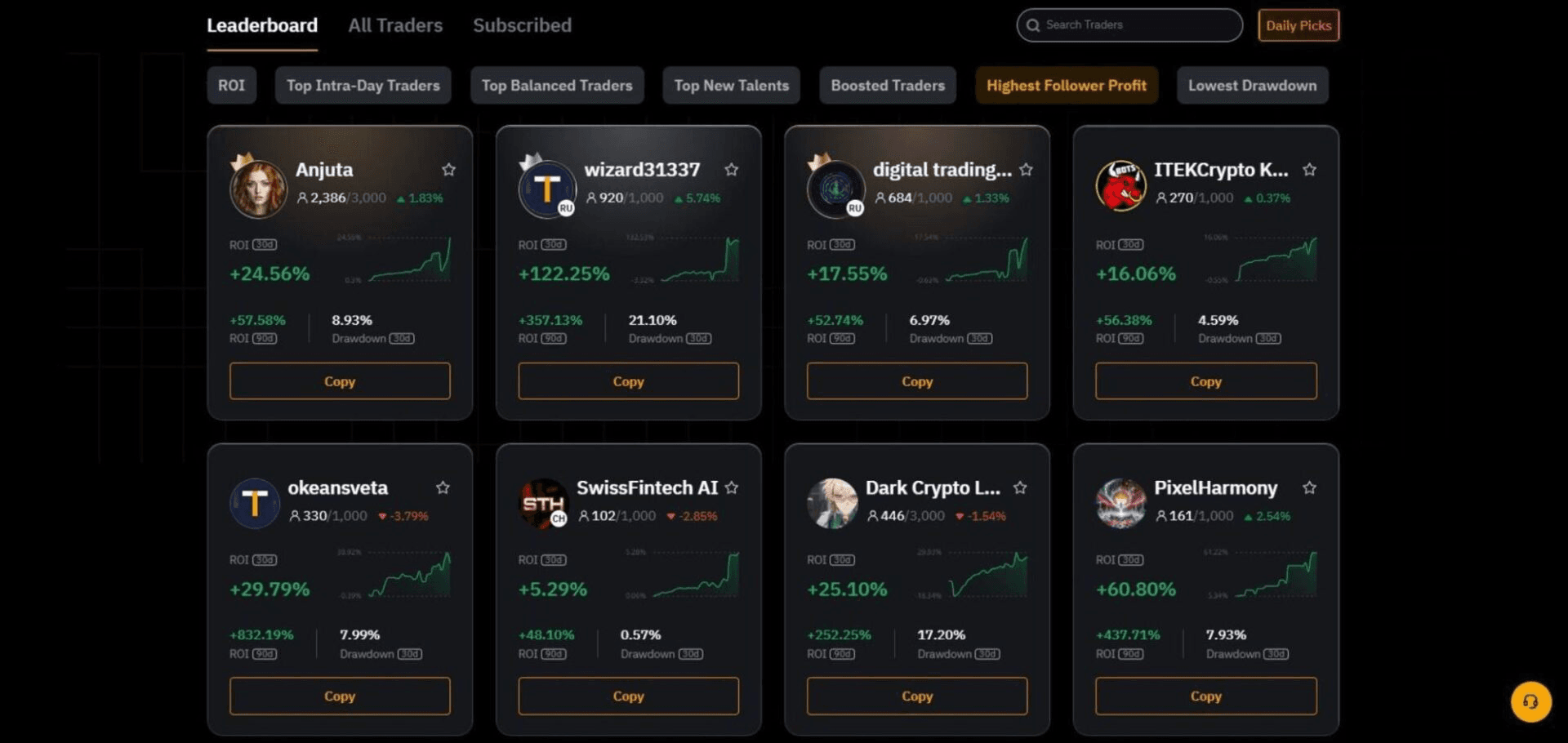
Buyer preference: Binance attracts retail traders who already keep funds on-exchange. They prefer low-friction copy setups that work inside the Binance app. Most are beginners to mid-level users seeking credibility from Binance’s brand rather than technical bot logic.
Implications for quant trader: Immediate replication and large discovery surface, but you operate within Binance’s UX and rules.
How it runs: Exchange-native copy with a tiered Lead Trader program. Profit share up to 30%, with weekly settlement and level-based rules. Managed trading sub-accounts support team operations and segregation.
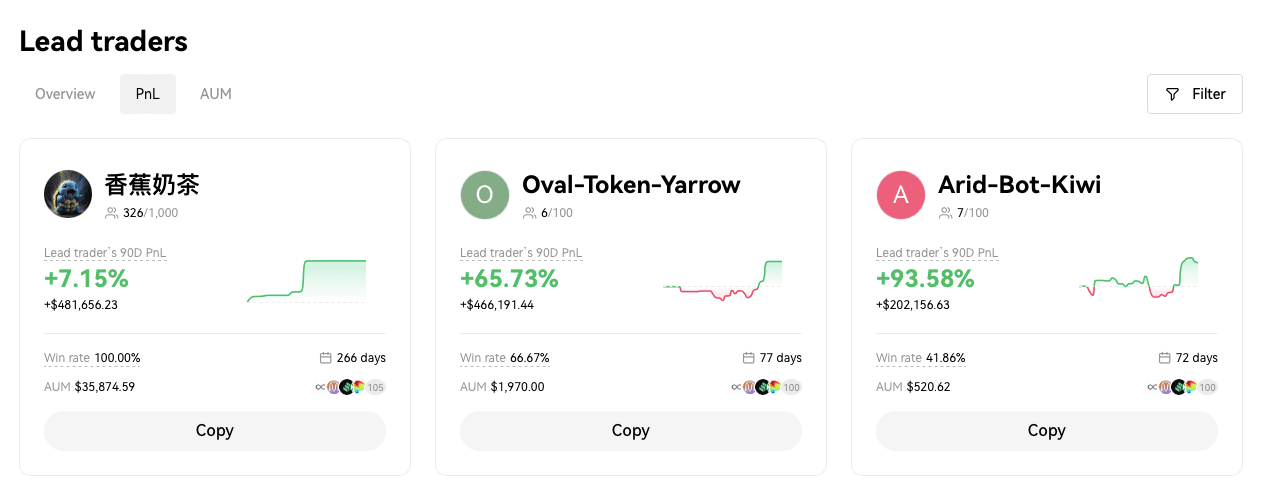
Buyer preference: Global traders who want derivatives exposure and trust OKX’s liquidity. They value higher potential payouts and structured governance. Users are slightly more advanced, willing to follow multiple strategies via sub-accounts.
Implications for quant trader: Suits multi-strategy teams needing sub-account governance. Verification and program requirements apply. Regional policies can affect eligibility.
How it runs:
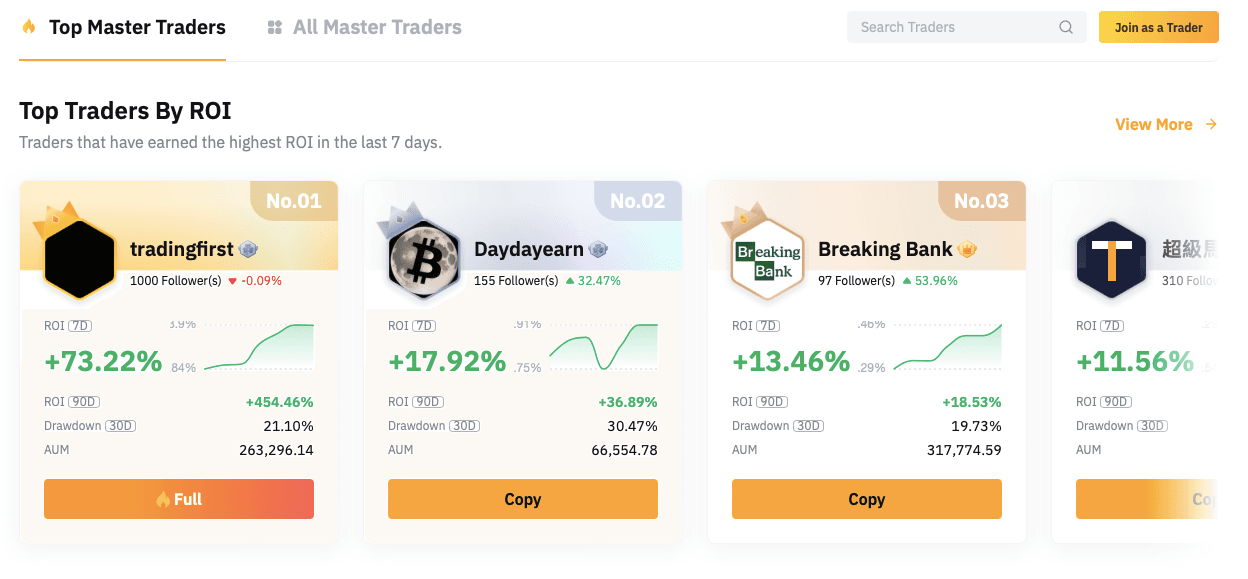
Buyer preference:
Implications for quant trader: Classic suits intraday replication. Pro suits strategies that tolerate windows and rebalance cadences, closer to a fund wrapper.
How it runs:
Proportional mirroring with a platform risk score (1–10). Popular Investors at higher tiers earn a monthly stipend based on AUC rather than per-trade profit share. Elite and Elite Pro tiers pay 1.5% of AUC annually up to stated bands, paid monthly, with drawdown and activity requirements.
Buyer preference: Mainstream retail users, many outside of crypto-first communities. They care about brand trust, social features, and regulated environment. Often beginners who want exposure to “top investors” without needing technical skill.
Implications for quant trader: Highly regulated, strong retail discovery. You optimize for AUC growth and risk score rather than per-trade payout.
How they run: You sell strategies, templates, and trading signals packaged for the platform. On Cryptohopper, sellers can list strategies, templates, signals, copy bots, and package deals with documented submission flows. Discovery is strong, especially for non-coders, but logic lives inside the platform format.
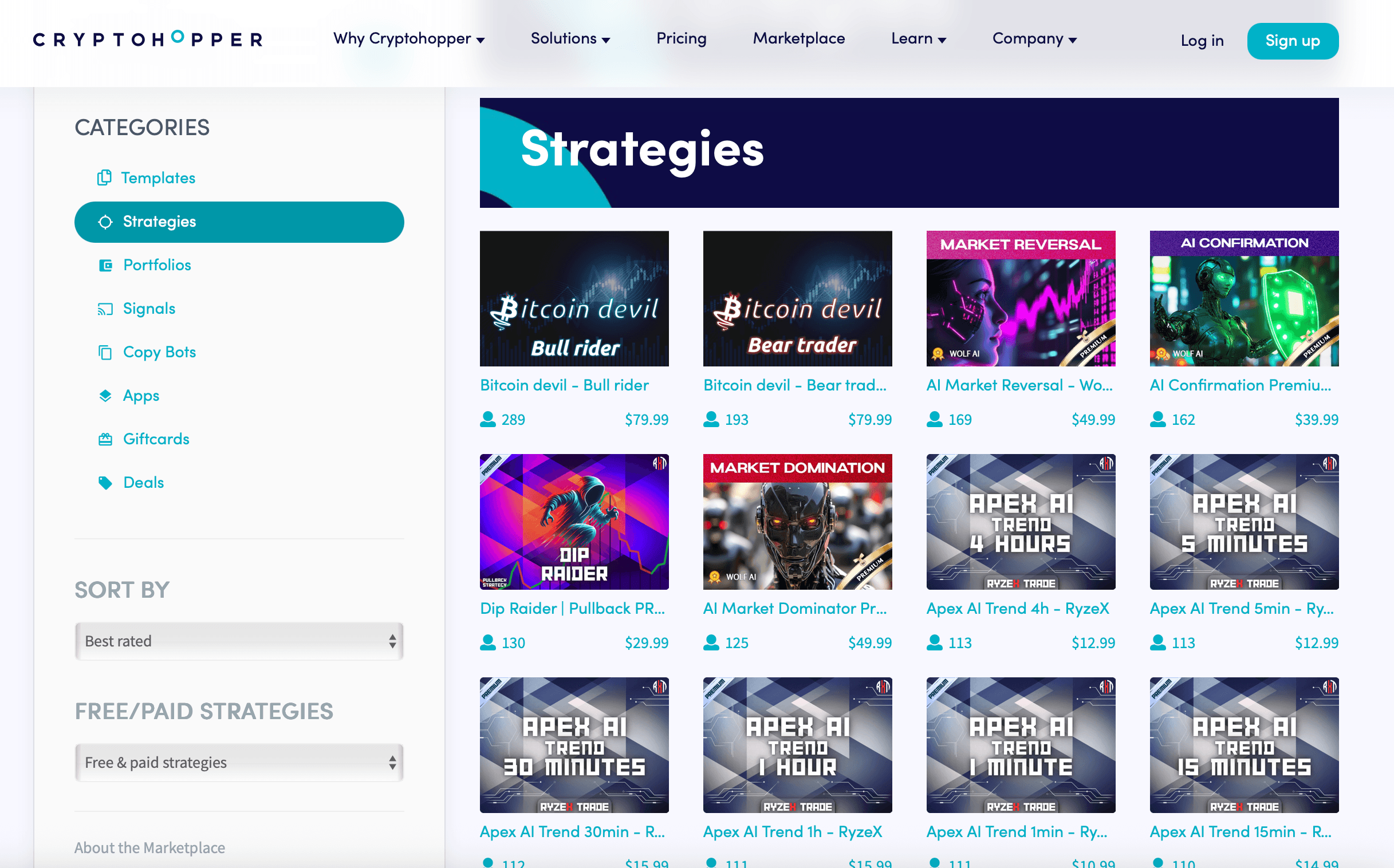
Buyer preference: Semi-technical traders or hobbyists who want plug-and-play bots. They are willing to pay for ready-to-use strategies without coding. Unlike broker copiers, they care about documentation, backtests, and configurable settings.
Implications for quant trader: Excellent for distribution if you are comfortable with proprietary packaging. Portability is limited.
How it runs: BuddyTrading is built for builders, quants, and retail algo traders who want to monetize their strategies directly. Unlike broker-led copy trading (which focuses on copying fills) or proprietary marketplaces (which lock strategies in a closed format), BuddyTrading accepts strategies in code, plugin, or even text-defined logic. The platform converts these into standardized bots, backtests them, and publishes performance cards for subscribers.
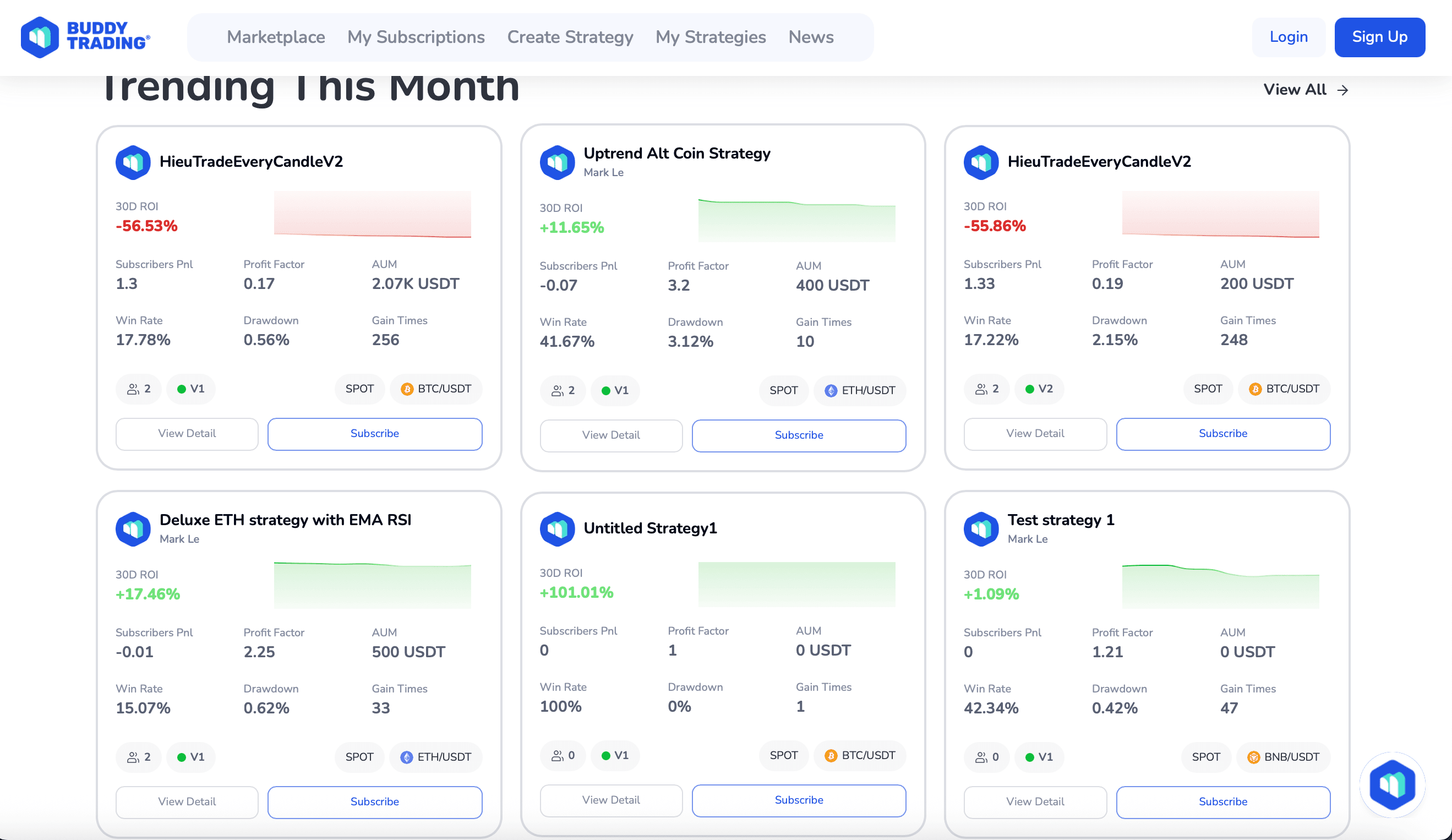
Buyer preference: BuddyTrading attracts a diverse buyer base, from retail traders looking for plug-and-play bots to semi-technical users who want transparent backtests and risk metrics. Buyers here care about discoverability, portability, and fair revenue share, rather than just brand trust.
Implications for quant trader: Creators retain ownership of their logic, face minimal barriers to entry, and can earn up to 30% profit share. With BuddyTrading’s built-in distribution (Telegram, Discord, X community of 10,000+), strategies can be amplified without heavy self-promotion.
Distinctive strengths:
Deeper breakdown on how to attract buyers? Revisit: Crypto Bot Social Selling 101 – A Step-by-Step Guide for Quant Trader
There isn’t a single platform that guarantees the most profit. Each type—broker-run programs, share-based products, social investing apps, and bot marketplaces—comes with its own mechanics, payout rules, and audience behaviors.
The key for quant traders and bot creators is to adapt and align: understand how profit-sharing works, what functions each venue supports, and how buyer behavior differs. By matching your strategy style and profile to the right platform, you maximize both fit and revenue potential.
Ready to Start Monetizing Your Edge?
Sign up with BuddyTrading before October to enter our elite community of quant builders, share open-source strategies and earn up to 30% profit sharing from day one.

Subscribe to our newsletter and be the first to access exclusive content and expert insights.
Learn how to promote your crypto trading bot with social selling from a marketing approach. Use GitHub, Discord, X, Reddit, and BuddyTrading to build trust and monetize strategies
 Sep 17, 2025

 7 min read